


Borders of the Heart: Lessons in Grief, Love and Freedom

by Margarita Dale
“Behold, I will do a new thing, Now it shall spring forth; Shall you not know it? I will even make a road in the wilderness And rivers in the desert.” (Isaiah 43:19 NKJV)
We have all heard the phrase, “You just need to let go,” spoken with the serene certainty of a therapist, a wise aunt, or a well-meaning friend, as if the words themselves contained some secret medicine. “Let go of clutter,” they say—the dusty boxes, the broken promises of projects never finished. Let go of toxic people whose presence leaves you diminished. Let go of jobs that drain the soul, roles that stunt growth. Letting go sounds simple in theory, but in practice, it is messy, loud with sobs, soaked in tissues, inconvenient, and unglamorous. It arrives raw and unruly—tangled in tears, sleepless nights, and the weight that settles in your chest. Though it is rarely graceful, it is always human—a necessary passage on the way to healing. I know this now, though I once repeated that phrase to others with strong conviction. But before I could teach it without irony, I had to walk through grief that split my life into a before and an after.

It was the spring of 2020, the season when the world itself seemed to stop breathing. Borders closed, streets fell silent, hospitals overflowed. The air held its breath. And while the world tilted on its axis, my own private world tilted, too. My mother—my vibrant, endlessly giving mother—was back in Russia while I remained in California, confined to my house and the rose garden around it. That garden had always been a comfort, though in truth, it was only a reflection of the one I had known as a child: the dacha—our family’s summer cottage in Russia—where blooming rose hips climbed the fence, where generations before me, and especially my mother, tended every plant with devotion.
One particular rose by the arbor became my companion in that season. Its petals were pale pink, tinged with blush, its fragrance rich and familiar. Every time I leaned close, it transported me across time and continents, back into the dacha of my childhood—the rose hips blossoms, the garden paths, the sun-warmed soil, my mother’s voice encouraging the plants as if they were children under her care. That rose’s fragrance became an anchor, reminding me that love persists even in absence, that memory is another kind of presence. That spring, my prayers flowed like shifting winds: first for borders to miraculously part, then for the gift of health for all, and finally, the hardest prayer—to find the grace to release what I could not hold.
My mother’s illness seemed only a shadow at first. Then it gathered force, and within weeks came the diagnosis: fourth-stage liver cancer. Soon after, a coma. Then silence. I remained an ocean away, staring at a screen, trying to absorb the unreality of her absence.
The grief descended unlike anything I had known. It wasn’t just the silence of her voice, the absence of her laughter, or the grounding presence she had always carried. It was sharper than that, an ache threaded with guilt that constricted my chest like iron bands. I tormented myself with endless questions. What if I had stayed with her longer on my last visit? What if I had been there? What if I had never left? What if she had felt alone in her final hours? The helplessness felt unbearable. The pandemic’s closed borders, the hospital’s restrictions, the distance of continents—all beyond my control—deepened the wound. My love was vast, but love could not breach those walls.
At night, I sat on the lawn of my backyard, staring at the stars, and the rose’s fragrance drifted in, a quiet reminder that love is not bound by distance. Slowly, almost imperceptibly, I began to understand: my mother did not measure my love by my presence at her bedside. It lived in the years of laughter, meals, shared burdens, and comfort we had woven together. That rose seemed to confide what I could not yet believe: love transcends physical presence.
In time, guilt softened into compassion. Helplessness became surrender. Grief itself, once an enemy, became a teacher, insisting I saw that love was not severed but transformed. Letting go did not mean forgetting; it meant releasing the weight of guilt and helplessness, allowing her life, not her death, to define her place in me.
I shared these insights with my father, hoping to ease his sorrow. Instead, he leaned heavily on me, transferring the codependency once belonging to my mother onto my shoulders. I spent hours consoling him, guiding him through his mourning, while quietly, my own health began to fracture. I had always believed myself resilient, but now panic attacks and nightmares came in waves. I had overestimated my strength and underestimated the cost of undrawn boundaries.
Meanwhile, my job, which once offered stability, turned into a source of suffocation, stifling my growth and wearing my health down further. I poured myself into the work, hoping diligence would matter, but nothing was ever enough. My body rebelled with migraines, gut pain, and anxiety fluttering in my chest. Deep down, I felt it was time to move on. Yet I clung to the illusion of security, convincing myself that in a world unraveling, at least I had something that resembled stability, even as that “security” dismantled me from within.
The body keeps score when the mind resists. My health faltered, doctors prescribed pills, but no medicine could soothe what was essentially a refusal to honor myself. I could sense every negative vibration; my nerves tuned like wires. I learned to turn off the news, to guard my intake of other people’s fears. Meditation became my anchor, prayer—my oxygen. I kept repeating the ancient wisdom over and over: “To every thing there is a season, and a time to every purpose under the heaven”
(Ecclesiastes 3:1 KJV). It offered a much-needed perspective: that grief had its season, as did hope, as did healing.
It seemed like I reached a breaking point, frayed by grief, overwhelmed with responsibilities, and drained by work that no longer nourished me. And yet, in that hollow place of depletion, something shifted. Small, unexpected miracles began to unfold, as if opening a door I hadn’t known was there.
While searching for answers, I discovered the work of a popular Russian psychologist who needed one of her books translated into English, so I volunteered. This project gave me unexpected clarity and purpose, as though words themselves became a form of healing. Shortly after that, I encountered RTT, Rapid Transformational Therapy, which became a revelation. RTT helped me release perfectionism and fear and step into a new sense of freedom.
I enrolled, trained, and got certified. What began as a search for relief became an initiation. I thought I was learning methods—hypnosis, regression, reframing—but instead, I was being taught trust, surrender, and the art of listening to the quiet guidance that had always been there. In moments when grief weighed too heavily, my mother’s presence wrapped around me like light. When uncertainty clouded my vision, clarity surfaced. When fear stopped me cold, I remembered I was not alone.
Along this journey, I realized something deeper: many of the borders we suffer are not imposed by others but built quietly within ourselves. I had carried invisible borders of guilt, self-doubt, and over-responsibility, mistaking them for obligations. But I also discovered I could dismantle those inner walls and, just as importantly, build boundaries where they were needed—not as barriers, but as sanctuaries. True strength came not from pleasing others but from aligning with my inner voice. In living true to that voice, I found myself untouchable—not hardened, but invulnerable.
Letting go did not erase pain, but it gave it meaning. Releasing my grip on what no longer served me—unfulfilling jobs, guilt, impossible responsibilities—opened space for grace to enter. Devastation became soil for growth; sorrow became the ground where unseen seeds of grace waited to sprout.
Through it all, the rose by the arbor bloomed. Its fragrance carried me back to my childhood dacha, to carefree summers where rose hips clung to fences, to my mother’s presence in every corner of the garden. That rose became a living bridge between past and present, between absence and presence, between loss and renewal.
Now, when I sit with clients navigating their own losses, I bring more than tools. I bring the lived knowledge of someone who has sat in the hollow of grief, who has known the ache of guilt, the helplessness of distance, the unraveling of health. I know what it is to release what no longer serves and to step, trembling but resolute, into a new era of purpose. I know what it is to be held by love that transcends borders, time, even death.
My garden continues to teach me. The rose offers its fragrance freely, inhaling and exhaling with me, year after year, as though to show me that healing is not a single event but a rhythm, a return. Letting go is the same; it is not done once, but again and again, in layers, in cycles.
When I finally let go, grief became awakening, loss became purpose, endings became beginnings. And in the tender stage of letting go, I found not a conclusion but the first steps of becoming whole, where trust, surrender, gratitude, and love wove together like threads of light, giving me courage to embrace life anew. And perhaps the rose, blooming faithfully each spring, reminds us that even after the harshest winters, life leans toward renewal, carrying with it the quiet promise that love, once rooted, never truly leaves.
My dear reader, if you find yourself in your own season of change, grief, or challenge, I invite you to place your hand on your heart and ask yourself: What weight am I still carrying that no longer belongs to me? Maybe it’s guilt, fear, or the pressure of always being strong. Whatever arises, name it. Let your body hear the truth. Now imagine loosening your grip, just a little. Feel what it’s like to set that burden down. Notice the lightness that enters. Ask yourself: What borders have I built within my heart? Which ones protect me, and which ones confine me? Pause and listen to the voice within that knows when it is time to let go and when it is time to stand firm. Write it down. Speak it aloud. Release what no longer serves you—whether through prayer, journaling, conversation, or quiet surrender. Let this be your first step toward freedom, toward a space where your heart feels safe, your love expansive, and your courage renewed.
Know this: you are not defined by what you lose, but by how you rise. No matter the losses you face, the love you carry, and the boundaries you honor, the choices you make to protect your inner light can make you untouchable in the most beautiful way—fully aligned with your truth. Letting go is not losing yourself. It is uncovering your truest strength. Today, release one burden. Honor one boundary. Step forward lighter, braver. You are stronger than you know, and every ending is an invitation to become whole. Stand in your truth and let your heart open again—because the seasons of grace will always return.
For my mother,
whose love still blooms in every rose.
For every soul learning to release,
to trust, and to rise again.
***
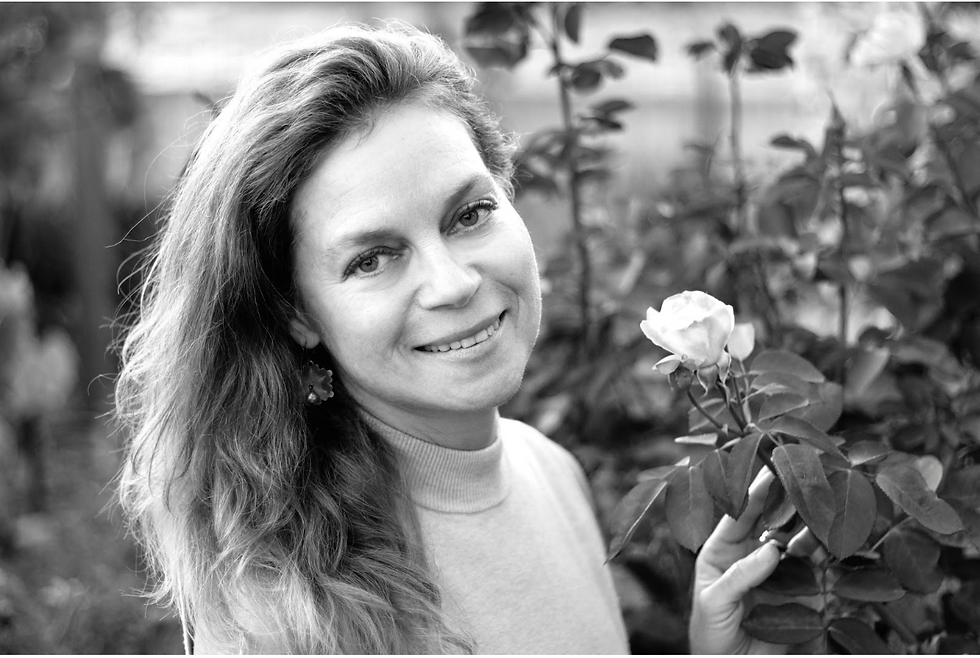
Margarita Dale is an educator, music instructor, and creator of Retune Therapy, a transformative blend of modalities, in which music and hypnotherapy come together to spark growth in children and adults. She earned her BA in Education in St. Petersburg and later sharpened her skills at Stanford. With decades of classroom experience—now at Marin Waldorf School and as a Rapid Transformational Therapist and Clinical Hypnotherapist, she helps people shed old limitations and step into their truest potential. Originally from St. Petersburg, Russia, Margarita has lived in Marin County for over 30 years, raising three children and uplifting her community through her family’s foundation, Families for Safer Schools. 📱 rita@retunetherapy.com | IG: @rita.dale | www.retunetherapy.com


Comments