


The Garden Left to Rot

by Shane Greene
trigger warnings: abuse, SA, domestic violence, miscarriage.

I was twenty-nine years old before I understood the idea behind a vegetable garden in their front yard fully blossoming and neglected, left to rot. Back when I first noticed that garden over on Helma Street in Appalachian North Carolina, I was a couple of weeks pregnant and was walking to one of my first prenatal appointments. I was only walking because the most recent person I’d bestowed best friend status upon had taken my car out (with my consent) a few months prior but had tried to commit suicide in it. The problem was more so that I was in my own passenger seat when he turned my car into a tree, folding us around it helplessly as if my belongings or life didn’t matter unless he decided it did. But that’s beside the point now.
Now, I know what you’re thinking: Why didn’t I cut contact and start anew? Well, I would have and eventually, I did. But it would take gathering self-respect, courage and a lot of planning before I’d be able to escape. Who said best friends can’t be abusive? Especially if they knew you were gay, got you drunk, landed you in their bed just to claim they had a magical ED-ridden cock that could turn even the butchiest of lesbians straight. But I was never straight, and I was plotting my escape from the first time I woke up next to repulsive fat rolls, picked at skin tags and moles on a large nose, snoring into my scrunched-up face.
His pong gathered in my lungs like a desperate desire to run away, but this friend was not just my closest acquaintance. He was my only connection and my next-door neighbor. He knew my ex-fiancé and me; he drank with us, and he preyed on me during our breakup. While she called me gross for landing next to a man, I felt like I couldn’t say no to free booze in my mouth, even if it came at the cost of an entire lost identity. Alcoholism was a disease, but between her words and waking up next to that, my ultimate motivation to find the cure commenced, and I was slowly but surely becoming unstoppable.
You might not believe me, reader, but it’s the truth. Being a lesbian and waking next to a man who’d manipulate me into a weird, neighborly and abusive relationship was my final straw; it was also a lesson on playing my cards the right way. I was about to learn how to stand up for myself. I was about to learn what battles were worth fighting. The rotten garden was about to teach me what my soul was desperate to learn.
Over the early Spring, I watched the garden as I’d walk each week to another appointment. Thick and sturdy stems grew out quickly from the fertile earth like a child would in one’s belly, spilling out some large, green and healthy leaves before buds would start to bloom, like the tapping of a little heartbeat inside of an awestruck mother, only, I wasn’t awestruck.
And then the fruit – the peppers that dangle on the end of a small limb, an arm barely able to carry the weight of life on itself, waiting for a human to notice and come to aid, would arch themselves in a line and grow. Like a chain, each link of life, nourishment, nutrients, and needs flourished in excess, overgrown.
The first night after I saw the garden overgrown, I felt a strong urge to sneak over in all black, Catwoman style and pluck all the plump tomatoes, glistening bell peppers and bright banana peppers off their overdue control bars, bringing them home and properly allowing them to fulfill their purpose.
This… friend of mine discussed this with me - actually debated stealing vegetables from someone’s front yard garden - but ultimately it was decided to leave things be, and I, scared of the consequences, never brought it up again. I didn’t think then that someone else’s garden could be symbolic, spiritual, some sweet metaphor asking me to reconsider if leaving was actually deadly or if staying is what sealed my fate.
I would learn. I would learn.
His logic to not steal the life of the garden left to rot? What if the owner is dead in there, and we, stirring around, might get caught up in the mix?
My logic? Obedience was easier than being hurt.
Even the bravest of us can still be overpowered, I had learned.
In my fantasies from then on, I snuck over to that house on Helma Street in some act of rebellion, choosing myself and safety in each plump fruit I’d pull off a desperate vine and claim as my own possession. I’d collect them all in some wrap, a baby sling, and carry their cries home with me until I’d chop their notes up, plop them into seasoned broth and call it a savory song of freedom.
Like a witch making a potion, I’d sneer as I’d watch each radiant fruit and vegetable cook in a large home, my cauldron, brewing into a heated form of healing, passion and rage. Over the heat, stirring with a wooden spoon, I’d add the energy of whimsical, childish and fun to the soup that I’d later serve to the ones that I love, but first, I had to learn how to serve to myself.
I didn’t go there that night, not really. My mind created soup while I curled up in bed, opting to allow my fantasies to become the version of me that I wanted to be, and thought of the baby in my belly, the size of a small grape. It didn’t seem real yet. I didn’t even know how I’d gotten pregnant. The doctor had added another sleeping pill, 100mg of trazodone, to my daily cocktail of horse pills, and I didn’t remember much since starting on them. They did help me sleep, though.
It had been a year of plotting an escape, but I still knew how to listen. I listened to him, the one convincing me that I was unhappy organically, that it was a malfunction in my brain, though I always knew better. Still, I listened to the doctors, the experts, who claimed I was an alcoholic because I was bipolar and not the other way around. Somehow, I listened to them, but every time I cried out for help, no one listened to me. So, I learned. I learned how to listen to everyone except for myself, the most important person that would ever be in my life.
Opting into uncomfortably comparing the baby to a piece of fruit, as odd as it may seem, I settled again. I didn’t want to have a child, but comparing them to nutritional foods helped humanize the weird feeling circling in my belly that felt a lot like being stuck.
A grape. A blueberry. A blackberry. A cherry tomato. But the neglected garden didn’t even have cherry tomatoes. Was there some value in these tiny fruits that could never grow into anything more than what they already were? Little helpless things, hardly able to nourish a rat and here I was, already looking at adoption agencies, talking to CARE and ready to head into the shelter, but… the next time I went for a prenatal appointment, I was following up after an emergency room visit. I’d started bleeding after carrying a heavy sink at work, and after the visit, I was told the news over the phone.
Walking to the doctor’s office with a face drained of color, I stopped to admire the beauty in the neglected garden in the front yard of some mysterious person’s house. It had been a couple of weeks, and not a soul had touched that garden.
The tomatoes had fallen and burst. Some were rotten on the limbs, and the leaves were curling in on themselves, turning brown, yellow, spotted and… dying. A rotten stench could be caught all the way out by the road, where I was.
The vines that were once so vibrantly fluttering in the wind and sunlight were shriveled and nearly fully black. Red and yellow peppers arched in on themselves like those rolling bugs that I played with as a child. Blankets of large green leaves no longer covered the fence posts, gates and awning. Instead, it was the sweet passage from neglect to death that I was witnessing while the wind told my soul things I wouldn’t understand until it was safe enough for the messages to come through.
Somewhere stuck in a transition, this garden was a lot like me; I just couldn’t see it at the time. Neglected by its own owner, the fruit that it produced would splatter and rot into the ground, creating the most fertile earth to grow from for the following years to come. A foundation of sorts, if you will.
With my hormones on the wild side, I started to cry outside of a stranger’s home, watching a garden die that somehow made me feel more alive, but... I forced myself to move on quicker than I wanted to. I forced myself to try not to find some lesson in the death of a flourishing garden while death had already occurred inside of mine. Were we connected somehow? Was I neglected like this garden? What had I done wrong?

Finally, at twenty-nine years old, I learned the significance of the neglected, dead garden that had captivated me back when I was twenty-four and had just miscarried a child I didn’t want but still grieved. I began to understand how the miscarriage helped me stay sober and escape a predator that would otherwise have ties to me forever. Leaving the sleeping pills and numbing agents back with the sick person who’d once claimed to be my friend, who “knew me better than I knew myself”, I found a healthy lifestyle and a passion for life that I cannot escape, nor do I want to.
These things take time. It’s never too late to choose yourself. Your own safety and well-being. The garden was a reminder, a sweet message, a soft nudge from the Universe saying, “hey, it’s okay. I’ll die with your baby, look how I can come back stronger next year, just like you will, too”, and when I was at the worst and lowest moment of my entire life, I was not alone. The garden carries on its rotten legacy in the depths of my mind, forever reminding me that death is a new beginning and that through suffering, the feeling of joy is cultivated internally.
My promise to the garden is to carry its message with me, to share it, to expose my vulnerabilities in hopes that someone sees themselves in my story and can catch on before the rot sets in. But if they can’t, I’ll still be here, fully understanding what it’s like to die and be reborn from the inside out. That’s the beautiful part about sharing our stories. No matter what, we’re never really alone, even when we feel it the most.
Even the most neglected of gardens can carry the most important of messages.
***
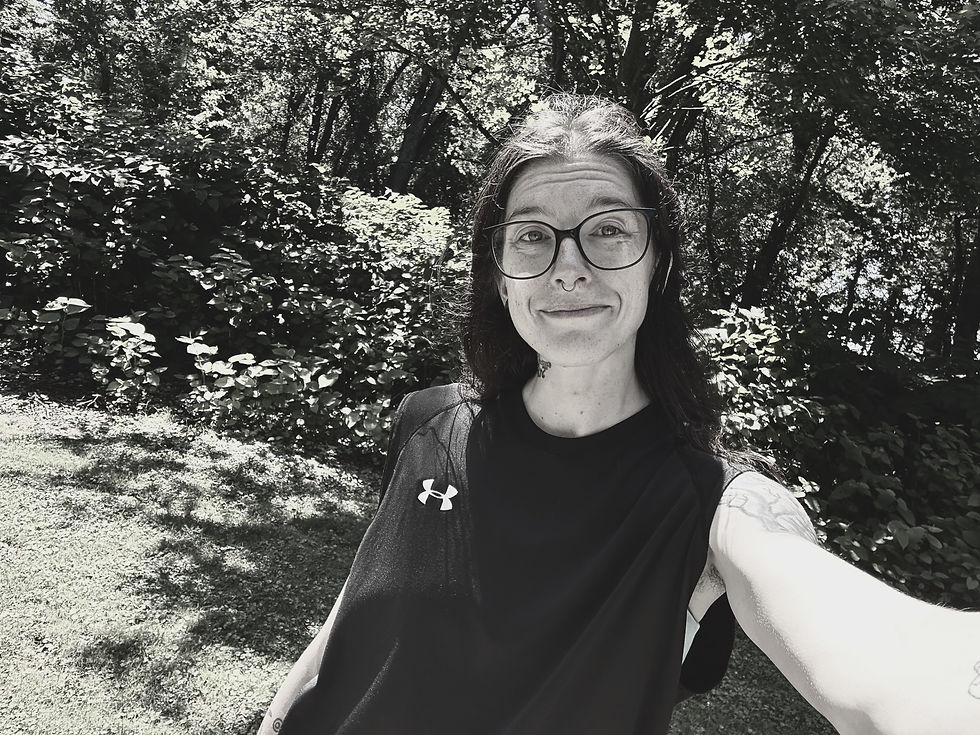
Shane Greene (she/her) is a lesbian poet and writer originally from Southwest Florida. When she's not spending time outdoors, she's likely at the local coffee shop or thrifting for more books. She is currently finishing her first novel and seeking representation for her first poetry chapbook. What excites her most about life and the future is that she knows one day, she'll be able to adopt a dog.


Comments